From Weeks to Minutes
An Agentic AI Audit Pipeline Across 29 Markets
Designing the human–AI division of labour for UX and accessibility audits in a regulated, 29-market enterprise.
Context.
Managing user experience at scale falls victim to its own success. Our accessibility (WCAG) and behavioural audit process had become an operational bottleneck: three fragmented tools (about 20 minutes per five key subpages), manual screenshots, analysis in Excel, static PDF reports — weeks per cycle. The underlying data existed, but it was siloed across roughly 20 research platforms, from Hotjar to localised tools, making real-time synthesis impossible across 29 markets. The cost was technical debt and real compliance exposure.
My role.
Approach. Rather than adding tools, I unified the data architecture around a single source and built a multi-layered agentic system on top of it:
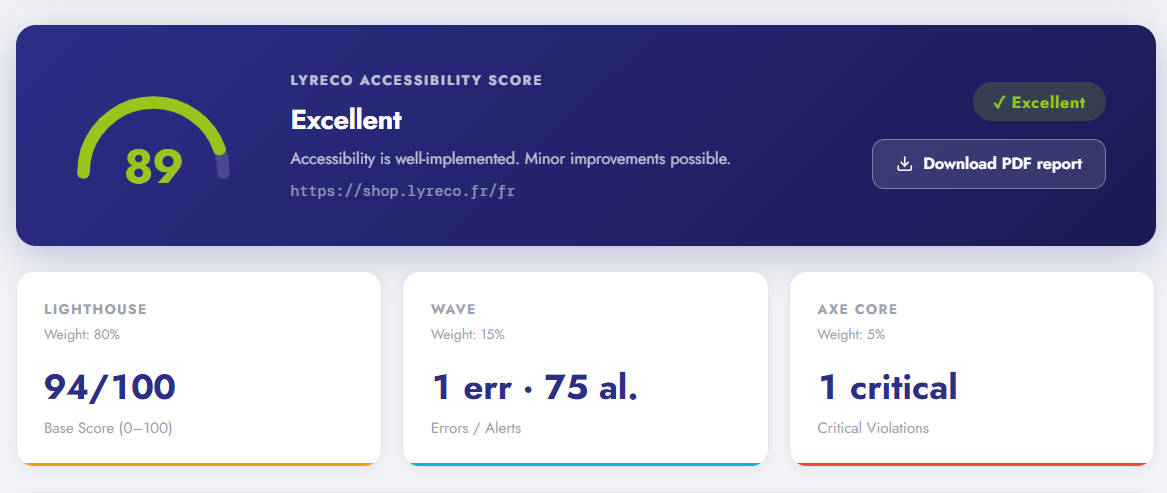
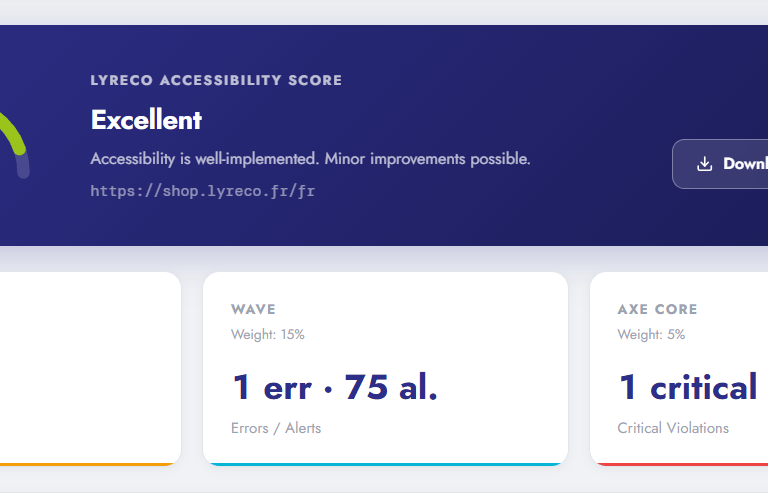
Audit agent (WCAG). Scans production, code and UI and returns a value-added package, not a data dump: a prioritised, screenshot-backed hierarchy of violations, an auto-generated accessibility statement, an executive summary for the C-suite, and — crucially — developer acceptance criteria translated out of legal-compliance language into something engineers can act on.
Behavioural-synthesis agent. Pulls from our behavioural-analytics source via API, deduplicates and organises the data, computes custom metrics (e.g. a "Frustration Score"), pinpoints the markets with the worst conversion blockers, and surfaces the exact session recordings that need human review. Strict script constraints keep hallucination risk low.
Shift-left. A streamlined version sits in the CI pipeline (Jenkins): after every deployment, accessibility is checked automatically and critical errors are blocked before they reach production.
Key decisions.
Trust was the whole game. With the board and security, in a regulated environment, I committed to processing only anonymised telemetry through secured APIs — no personally identifiable information ever reaches a public model. With engineering, the system stopped being "more bug reports" the moment it began delivering ready-made technical fixes and automated tests; it became support rather than overhead.
Outcome.
Audits dropped from weeks to minutes. Freed from manually combing heatmaps and WCAG checklists, the design team moved up the value chain — to interviews, qualitative research and discovery — and started asking sharper questions about the real root causes of friction. Barrier-free products now ship across 29 markets faster than before.